


- Home
- Why Choose Us
- Attorneys
- Practice Areas
- Personal Injury
- The Personal Injury Legal Process
- FAQs
- Car Accidents
- Common Car Accident Causes
- Common Car Accident Injuries
- Construction Zone Accidents
- Dangerous Highways
- Distracted Drivers
- Drunk Driving Accidents
- Failure to Stop
- Head On Collisions
- Open Intersections
- Rear End Collisions
- Rollover Accidents
- Uber and Lyft Rideshare Accidents
- Uninsured and Underinsured Motorists
- FAQs
- ATV and Recreational Vehicle Accidents
- Motorcycle Accidents
- Pedestrian Accidents
- Truck Accident
- Bus Accidents
- Train Accidents
- Medical Malpractice
- Nursing Home Negligence
- Premises Liability
- Product Liability
- Severe Catastrophic Injuries
- Farm Accidents
- Construction Accidents
- Government Liability
- Wrongful Death
- Workers' Compensation
- Arm and Shoulder Injuries
- Asbestos Exposure
- Back Injuries
- Carpal Tunnel
- Knee Injuries
- Mesothelioma
- Occupational Diseases
- Pre-existing Condition Aggravation
- Repetitive Stress Injuries
- Traumatic Injuries
- Vehicle Accidents On the Job
- Denied Claims, Arbitration and Appeals
- Permanent and Total Disability
- Third-Party Claims
- Wage Benefits
- FAQs
- Personal Injury
- Case Results
- Media
- Scholarships
- Careers
- Blog
- Contact
Understanding Shared Fault Car Accidents in Illinois
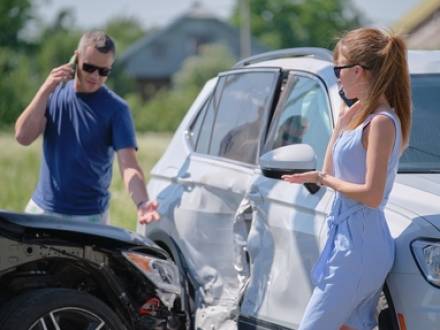 Shared fault car accidents in Illinois happen when more than one driver contributes to causing a crash. Illinois law sometimes still lets you recover compensation even if you were partly to blame. Kanoski Bresney brings over 100 years of combined experience to car accident cases, so if you're seeking compensation after a collision in 2026, our Decatur, IL personal injury lawyers can explain how shared fault may affect your case.
How Does Illinois Handle Shared Fault in Car Accidents?
Under 735 ILCS 5/2-1116, Illinois follows a modified comparative negligence system. This means you can still recover damages for your injuries if you're found 50 percent or less at fault for the accident. Anything over 50 percent means you won’t be able to receive compensation.
If you qualify, your compensation is reduced by your percentage of fault. For example, say you're found 30 percent responsible for a crash and your damages total $100,000. You would generally recover $70,000 instead of the full amount.
Who Decides How Fault Is Divided in an Illinois Car Accident?
Insurance adjusters look at the specific facts of the accident to assign a percentage of fault to each driver involved. A judge or jury does this too, if the case goes to trial. This process isn't always straightforward. Two or more drivers can each contribute to causing a crash in different ways.
For example, one driver might have been speeding while another failed to signal before changing lanes. Both actions could have played a role in causing the collision. This means both drivers might share some percentage of blame.
What Evidence Helps Determine Fault Percentages in an Illinois Car Accident Case?
Building a strong case around shared fault requires gathering specific evidence. Helpful evidence includes:
- The police accident report and any citations issued
- Witness statements describing what each driver was doing before the crash
- Traffic camera or dashcam footage showing the moments leading up to the collision
- Photos of vehicle damage, which can indicate the direction and force of impact
- Cell phone records showing whether either driver was distracted
The more evidence available, the clearer picture emerges of how much each driver actually contributed to the accident.
Why Do Insurance Companies Fight Hard Over Fault Percentages in Car Accidents?
Insurance companies have a strong financial incentive to assign you as much fault as possible. Every percentage point shifted onto you reduces what they ultimately have to pay. This means adjusters often push for a higher fault percentage than the facts actually support. They hope you'll accept their initial assessment without question.
This tactic works often enough that insurance companies use it regularly. This is one of the main reasons working with an attorney who can push back against an unfair fault assessment matters so much.
Can Fault Be Split Between More Than Two Drivers?
Multi-vehicle accidents can involve fault being divided among three or more drivers. This depends on how each person's actions contributed to the crash. It can make these cases more complicated. Insurance companies representing different drivers may each try to shift blame onto someone else.
Sorting out fault in these situations often requires a more detailed investigation. Some cases even call on accident reconstruction experts to present a clearer picture of liability. An experienced attorney can help you build your claim to best represent your position.
How Long Do You Have to File a Car Accident Claim in Illinois?
Under 735 ILCS 5/13-202, you generally have two years to file a personal injury lawsuit after a car accident in Illinois. This deadline is known as the statute of limitations. If you wait too long to file your lawsuit, you may lose your right to recover compensation for your injuries, even if another driver was mostly at fault.
What Should You Do After a Shared Fault Accident?
What you do in the hours and days after a shared fault accident can shape the entire outcome of your claim. Start by collecting as much evidence as you can right at the scene. This includes photos of both vehicles, the road conditions, and anything else that might explain how the crash happened. Get contact information from any witnesses nearby, since their account could become important later if fault gets disputed. Your attorney will help you get any other evidence that supports your version of events.
Be careful about what you say to the other driver or their insurance company. A simple apology or an offhand comment can later get twisted into an admission of fault, even if that's not what you meant. Before you agree to any settlement or sign off on a proposed fault determination, talk to an attorney first. Once you accept an offer, it's often difficult or impossible to go back and ask for more, even if new information comes to light later.
Schedule a Free Consultation With Our Decatur, IL Car Accident Attorneys
Attorney Todd Bresney brings valuable insight into how these disputes get investigated and argued, drawing on his prior experience at the Federal Trade Commission and as a State's Attorney for Cook County. If you're ready to discuss your case, contact Kanoski Bresney at 888-826-8682 to talk to our Bloomington, IL personal injury lawyers today.



SPRINGFIELD
2730 South MacArthur Blvd.
Springfield, IL 62704
217-523-7742
BLOOMINGTON
237 East Front St.
Bloomington, IL 61701
309-829-5700
RUSHVILLE
129 South Congress St.
Rushville, IL 62681
217-322-4346
PEKIN
427 1/2 Court St.
Pekin, IL 61554
309-353-9828
CHAMPAIGN
314 South Neil St., Ste 100
Champaign, IL 61820
217-356-1570
QUINCY
2632 Broadway St.
Quincy, IL 62301
217-222-5504
MACOMB
118 North Lafayette St.
Macomb, IL 61455
309-836-1002
DECATUR
335 East Wood St., Ste A
Decatur, IL 62523
217-429-3509
