


- Home
- Why Choose Us
- Attorneys
- Practice Areas
- Personal Injury
- The Personal Injury Legal Process
- FAQs
- Car Accidents
- Common Car Accident Causes
- Common Car Accident Injuries
- Construction Zone Accidents
- Dangerous Highways
- Distracted Drivers
- Drunk Driving Accidents
- Failure to Stop
- Head On Collisions
- Open Intersections
- Rear End Collisions
- Rollover Accidents
- Uber and Lyft Rideshare Accidents
- Uninsured and Underinsured Motorists
- FAQs
- ATV and Recreational Vehicle Accidents
- Motorcycle Accidents
- Pedestrian Accidents
- Truck Accident
- Bus Accidents
- Train Accidents
- Medical Malpractice
- Nursing Home Negligence
- Premises Liability
- Product Liability
- Severe Catastrophic Injuries
- Farm Accidents
- Construction Accidents
- Government Liability
- Wrongful Death
- Workers' Compensation
- Arm and Shoulder Injuries
- Asbestos Exposure
- Back Injuries
- Carpal Tunnel
- Knee Injuries
- Mesothelioma
- Occupational Diseases
- Pre-existing Condition Aggravation
- Repetitive Stress Injuries
- Traumatic Injuries
- Vehicle Accidents On the Job
- Denied Claims, Arbitration and Appeals
- Permanent and Total Disability
- Third-Party Claims
- Wage Benefits
- FAQs
- Personal Injury
- Case Results
- Media
- Scholarships
- Careers
- Blog
- Contact
Recent Blog Posts
Who Is Responsible for a Wide-Turn Truck Accident in Illinois?
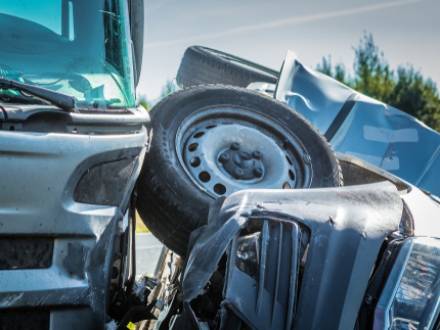 Responsibility for a wide-turn truck accident in Illinois usually falls on the truck driver. Most often, these accidents happen when the driver fails to turn safely. However, the trucking company may also be liable as well, often because of training, maintenance, or scheduling pressure that contributed to the crash.
These accidents can involve more than one potentially responsible party and can be very complicated. At Kanoski Bresney, our attorneys bring over 100 years of combined experience to cases like these. If you were hurt in a wide-turn crash in 2026, contact our Springfield, IL personal injury lawyers to find out how we can help.
Why Do Wide-Turn Truck Accidents Happen?
Large trucks need extra room to complete a turn safely. This isn’t just a matter of practical safe driving – the law in Illinois says so as well. Under 625 ILCS 5/11-801, any driver making a right turn must approach and make the turn as close as practical to the right-hand curb or edge of the roadway.
Understanding Shared Fault Car Accidents in Illinois
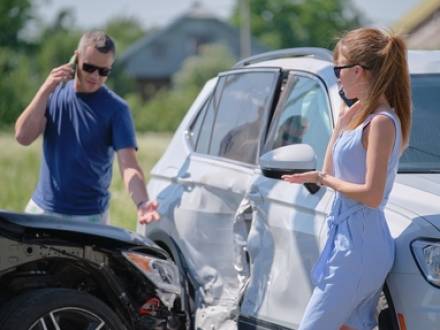 Shared fault car accidents in Illinois happen when more than one driver contributes to causing a crash. Illinois law sometimes still lets you recover compensation even if you were partly to blame. Kanoski Bresney brings over 100 years of combined experience to car accident cases, so if you're seeking compensation after a collision in 2026, our Decatur, IL personal injury lawyers can explain how shared fault may affect your case.
How Does Illinois Handle Shared Fault in Car Accidents?
Under 735 ILCS 5/2-1116, Illinois follows a modified comparative negligence system. This means you can still recover damages for your injuries if you're found 50 percent or less at fault for the accident. Anything over 50 percent means you won’t be able to receive compensation.
3 Steps To Follow if You Are Injured in a Workplace Accident
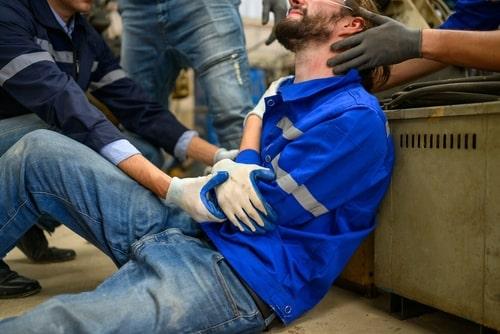 If you're injured in a workplace accident, three steps matter most. Seek immediate medical treatment. Report the injury to your employer right away. Document everything related to your injury and how it happened. A workplace injury can throw your whole routine off balance. It's natural to worry about things like your job security or how you'll keep up with bills while you're out of work.
If you've been injured on the job in 2026, our Peoria, IL workers' comp lawyers can help you understand your rights and protect your claim.
What Steps Should You Take After a Workplace Injury?
Taking the right steps early can protect both your health and your workers' comp claim. Each step plays its own role, and skipping one can create problems later.
Step One: Seek Immediate Medical Treatment
Getting proper medical care right away matters for your health and your claim. Seeing a doctor creates a record connecting your injury to your workplace accident, even if the injury seems minor at first. This record becomes important evidence later if anyone questions how or when you were hurt.
How Are Spinal Cord Injuries Handled in Illinois Motorcycle Accident Claims?
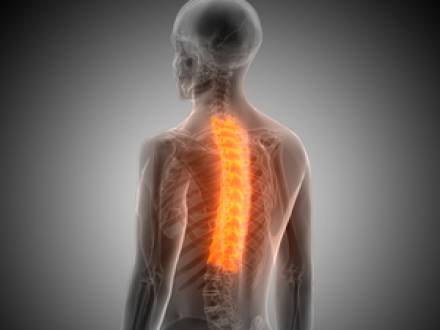 Spinal cord injuries from motorcycle accidents are handled through personal injury claims in Illinois. These claims cover your immediate medical costs. They also cover the lifelong impact this injury has on your daily life, work, and independence.
Kanoski Bresney brings over 100 years of combined legal experience to these cases. This experience is important, since spinal cord injury claims can get complicated. If you need to file a claim in 2026, our Champaign, IL spinal cord injury lawyers can help you pursue the full compensation you deserve.
Why Do Motorcycle Accidents Cause Such Severe Spinal Injuries?
Motorcyclists do not have the same protection around them as people riding in cars. This means the rider's body can take much more of the force from a crash. Serious spinal cord injuries can result from the impact itself or from being thrown from the motorcycle. The severity of a spinal injury can depend on factors such as speed, the angle of impact, and whether the rider was thrown from the motorcycle.
Can Emergency Room Triage Errors Lead to a Malpractice Claim?
 Emergency room triage errors can lead to a malpractice claim. This happens if a mistake in evaluating or prioritizing your condition caused you harm that proper care would have prevented. Triage is meant to make sure the most seriously ill or injured patients are seen first. When this process fails, the consequences can be severe.
Kanoski Bresney brings over 100 years of combined legal experience to medical malpractice cases. Our Springfield, IL medical malpractice lawyers can help you understand whether you have a valid claim in 2026.
What Is Triage and Why Does It Matter in the ER?
Triage is the process emergency room staff use to quickly assess patients. It helps determine who needs immediate care versus who can safely wait. This process relies on trained medical judgment to evaluate symptoms, vital signs, and other warning signs that point to a serious or life-threatening condition.
Can Emotional Abuse Be Grounds for a Nursing Home Lawsuit?
 Emotional abuse can be grounds for a nursing home lawsuit in Illinois, even though it doesn't leave physical marks. Courts recognize that psychological harm can be just as damaging as physical injury. This is especially true for elderly residents who depend on facility staff for their daily care and safety.
If you suspect your loved one has been emotionally mistreated in a nursing home in 2026, contact Kanoski Bresney today. Our Bloomington, IL personal injury lawyers have over 100 years of combined experience. We can help you understand your legal options.
What Counts as Emotional Abuse in a Nursing Home?
Emotional abuse happens when staff members use words or actions to intimidate, humiliate, isolate, or frighten a resident. Unlike physical abuse, it often leaves no visible evidence. That can make it harder for families to recognize and prove.
Do I Have Enough Evidence for a Car Accident Claim?
 Whether you have enough evidence for a car accident claim depends on what you've gathered so far. This includes police reports, photos, witness statements, and medical records. Even if you feel like you're missing key pieces, an attorney can often help you obtain evidence you don't currently have access to.
With over 100 years of combined experience, the attorneys at Kanoski Bresney have helped many clients build strong cases, even when they weren't sure their existing evidence was enough. Our Springfield, IL personal injury lawyers can review what you already have. We’ll help you search for what else might strengthen your claim.
Do You Need a Police Report to File a Car Accident Claim?
A police report isn't always legally required to file a car accident claim. But it's one of the most valuable pieces of evidence you can have. Under Illinois law, 625 ILCS 5/11-401, drivers involved in an accident resulting in injury, death, or property damage are required to stop at the scene and exchange information.
Can You Get Workers' Comp for Carpal Tunnel?
 You can get workers' compensation for carpal tunnel syndrome in Illinois. This applies if your job duties caused or significantly contributed to the condition. Illinois law covers repetitive stress injuries just as it covers sudden, one-time accidents.
Carpal tunnel can develop slowly over months or years of repetitive motion. This sometimes makes people unsure whether their condition even qualifies for benefits. If you’re suffering from carpal tunnel and have questions about compensation, our Decatur, IL workers' comp lawyers can help you understand your rights. At Kanoski Bresney, we’ll put over 100 years of combined legal experience to work for you.
What Does Illinois Law Say About Workers’ Comp for Repetitive Stress Injuries Like Carpal Tunnel?
Under the Illinois Workers' Compensation Act, 820 ILCS 305/1, an injury doesn't have to result from a single traumatic event to qualify for benefits. This law covers injuries that develop gradually over time due to repetitive work activities. Because this type of injury builds up slowly, it can sometimes require more documentation to prove than an injury from a single accident. However, that doesn't make it any less valid under Illinois law.
What Type of Compensation Am I Entitled to in a Pedestrian Accident?

If you were hit by a car as a pedestrian, you may be entitled to compensation for your medical bills, lost wages, pain and suffering, and more. The physical, emotional, and financial toll of these accidents can be enormous, given the vulnerability of pedestrians. Knowing what types of compensation you can pursue helps make sure nothing is left on the table. If you were hurt in a pedestrian accident in 2026, the Bloomington, IL personal injury lawyers at Kanoski Bresney can help you fight for every dollar you deserve.
What Is the Legal Basis for a Pedestrian Accident Claim in Illinois?
Most pedestrian accident claims are based on negligence. To recover compensation, you have to show four things:
- The driver had a duty to drive safely.
- They broke that duty by acting carelessly or recklessly.
- Their actions directly caused the accident.
How Is the Settlement Divided in an Illinois Wrongful Death Case?
 According to the CDC, unintentional injuries are the third leading cause of death in the United States, claiming nearly 200,000 lives in 2024, with motor vehicle accidents and falls among the top causes. When a preventable death leaves your family without someone you depended on, Illinois law allows you to pursue financial compensation from the party responsible for your loss. The law also determines how that compensation is divided.
If your family is dealing with a wrongful death case in 2026, the Springfield personal injury lawyers at Kanoski Bresney can help you understand the process and make sure your family's interests are protected.
What Is a Wrongful Death Claim in Illinois?
A wrongful death claim is a lawsuit filed on behalf of someone who died because of another person's negligent or wrongful conduct. In Illinois, these claims are governed by the Wrongful Death Act, 740 ILCS 180/1.



SPRINGFIELD
2730 South MacArthur Blvd.
Springfield, IL 62704
217-523-7742
BLOOMINGTON
237 East Front St.
Bloomington, IL 61701
309-829-5700
RUSHVILLE
129 South Congress St.
Rushville, IL 62681
217-322-4346
PEKIN
427 1/2 Court St.
Pekin, IL 61554
309-353-9828
CHAMPAIGN
314 South Neil St., Ste 100
Champaign, IL 61820
217-356-1570
QUINCY
2632 Broadway St.
Quincy, IL 62301
217-222-5504
MACOMB
118 North Lafayette St.
Macomb, IL 61455
309-836-1002
DECATUR
335 East Wood St., Ste A
Decatur, IL 62523
217-429-3509
